

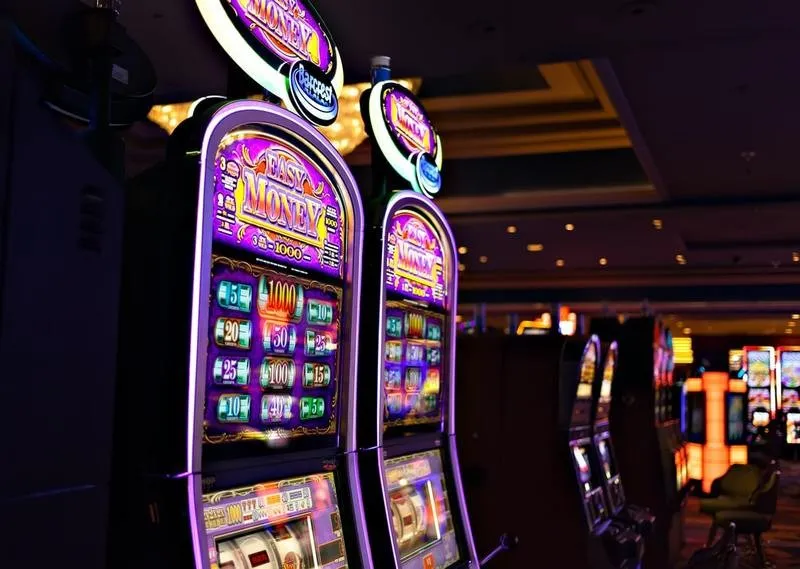
Before digital screens, animated bonuses, and electronic sound effects, a slot machine was a machine in the most literal sense. Players inserted a coin, pulled a lever, and listened as metal parts moved inside a cabinet. Reels spun, symbols passed the viewing window, and a winning combination could trigger a shower of coins.
These machines became known as one-armed bandits because of their side-mounted lever and their reputation for taking players’ money. Their appeal came partly from the simplicity of the experience. You could see the reels moving, hear the mechanism stop, and understand the basic result without needing to read a screen.
The 1950s represented an important period for traditional mechanical slots. Although earlier machines had established the basic design, manufacturers continued refining their mechanisms, cabinet styles, payout systems, and symbols. Understanding how these machines worked reveals the engineering behind one of the most recognizable objects in vintage casino history.
The Basic Design of a Mechanical Slot Machine
A traditional three-reel slot machine was built around several key components: a coin mechanism, a lever or handle, a spring-powered or motor-assisted mechanism, three symbol reels, and a payout assembly.
The player inserted an accepted coin into the machine. The coin mechanism checked whether it could be accepted and, depending on the design, either directed it into the machine or rejected it. Once the machine was ready, pulling the lever activated the mechanism that started the reels.
Inside the cabinet, the reels rotated around a central spindle. Each reel carried a strip of symbols arranged in a particular sequence. When the reels stopped, the symbols visible through the front window determined whether the result matched a winning combination.
Unlike a modern video slot, the result was represented by physical objects moving into position. The reels, stops, springs, and linkages all had to work together reliably.
What Happened When a Player Pulled the Lever?
The lever was more than a decorative feature. It was part of the machine’s control system.
On many traditional designs, pulling the handle released a mechanism that allowed the reels to spin. Springs, gears, shafts, and other moving parts helped coordinate the cycle. The exact design varied by manufacturer and model, so not every 1950s machine worked in precisely the same way.
The lever also gave the player a satisfying sense of physical participation. Rather than pressing a button, the player applied force to a handle and felt the mechanism respond.
Once activated, the reels continued moving before stopping in sequence. Mechanical stops and related components determined where the reels settled. The final arrangement was then compared with the machine’s payout rules.
The engineering challenge was to make this cycle repeat consistently despite thousands of uses, dust, wear, and the occasional forceful pull from an impatient player.
How the Reels and Symbols Worked
Each reel carried a strip with symbols printed or attached around its circumference. Common symbols included fruit, bells, bars, and other familiar icons. The Liberty Bell, associated with Charles Fey’s early slot-machine design, became an influential symbol in the history of the industry.
The order and number of symbols on each reel mattered. A machine’s possible combinations depended on the symbols available and the positions at which the reels could stop. Different machines used different reel layouts and payout schedules.
A player generally won when the displayed symbols matched one of the combinations specified by the machine. Some designs included several possible winning arrangements, while others had relatively simple payout rules.
The visible reel was only part of the system. Hidden inside the cabinet, stops and payout linkages connected the result to the mechanism that released coins. The front of the machine provided the experience; the internal engineering made that experience function.
The Coin and Payout Mechanism
Mechanical slots had to handle both the money entering the machine and the money paid back to winners. Coin mechanisms used physical components to assess whether an inserted coin met the machine’s acceptance requirements. Depending on the design, these mechanisms could use features such as size, weight, or other physical characteristics.
When a winning result occurred, the payout mechanism released the appropriate number of coins. On many machines, the payout system used levers, cams, and linked parts to control how many coins entered the payout tray.
The familiar cascade of coins was an important part of the experience. It provided an immediate, visible reward rather than a number appearing on a screen.
Mechanical systems also had limitations. Components could jam, wear out, or require adjustment. Casino technicians needed to keep the mechanisms clean and correctly aligned to maintain reliable operation.
How Manufacturers Controlled the Odds
Mechanical slot machines did not need computer software to produce different probabilities. The arrangement of symbols and the positions available on each reel could influence the range and frequency of combinations.
For a simplified example, imagine a machine with three reels and ten equally likely stopping positions on each reel. If each reel could stop independently at any of those positions, there would be \(10 \times 10 \times 10 = 1{,}000\) possible position combinations.
Real machines were more complicated. Symbol distributions could differ between reels, and the mechanical design could affect the available stopping positions. The payout table also determined how much a winning combination returned.
A machine’s expected return depended on the probabilities of its outcomes and the corresponding payouts, not just on how many symbols were visible. It is therefore impossible to determine the exact odds of a historical slot merely by looking at its cabinet.
Why the Mechanical Era Eventually Ended
Mechanical slots were durable and engaging, but they had practical limits. They contained many moving parts, required maintenance, and offered only a restricted range of game designs compared with later electronic systems.
Electromechanical machines gradually introduced electrical components to automate functions that had once depended entirely on mechanical linkages. Later electronic slots used circuits and, eventually, microprocessors to control game outcomes and features.
Video slots expanded the possibilities further. Manufacturers could create new themes, bonus rounds, complex pay tables, and visual effects without building a separate mechanical system for every feature.
The physical lever eventually became optional, but its design remains an enduring symbol of casino history.
Conclusion
The classic one-armed bandit was a carefully engineered system of reels, springs, levers, coin mechanisms, and payout components. Its simple exterior concealed a network of moving parts that had to coordinate every spin and every winning result.
The 1950s slot machine helped establish the look and feel that generations of casino visitors came to recognize. Modern machines may rely on electronics and software, but the old mechanical slots remain fascinating examples of practical engineering and industrial design.
FAQs
1. Why were slot machines called one-armed bandits?
The name referred to the lever mounted on the side of many machines and the way they could take players’ coins without paying out.
2. Did 1950s slot machines use computers?
Traditional mechanical models did not use computers to determine outcomes. Their operation relied on physical mechanisms, although later machines introduced electrical and electronic controls.
3. How did old slot machines know when to pay out?
Mechanical stops and linkages connected the reels’ final positions to a payout mechanism. When a recognized winning combination appeared, the mechanism released the specified coins.
4. What symbols appeared on vintage slots?
Common symbols included fruit, bells, bars, and other icons. The exact symbols and payout combinations depended on the machine’s manufacturer and model.
5. Can antique slot machines still work today?
Yes, some restored examples can operate, although their condition varies. Collectors should check local laws before buying, restoring, or operating a gambling machine.